

HOW TO SAFELY DEFROST FROZEN FOODS
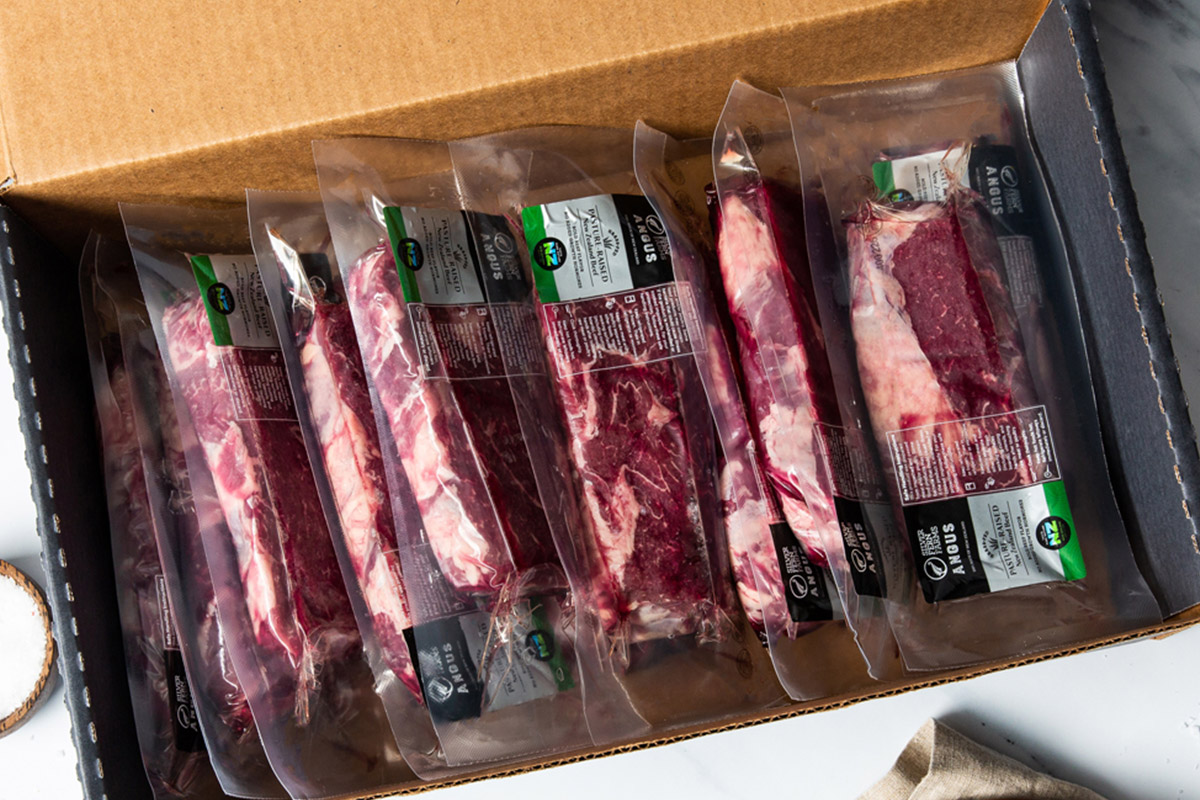
Many of our specialty meats and fish are frozen for better quality and storage, which is great for shipping and keeping in your freezer, but what’s the best way to thaw frozen foods when it comes time to enjoy your specialty meats or top quality seafood?
We recommend two defrosting methods used by commercial restaurants to ensure the quality and safety of their frozen product:
REFRIGERATOR THAWING
This is by far the best method for defrosting meat and fish if you can plan ahead. While thawing in a cold environment takes substantially longer, doing so ensures the food never becomes warm or experiences damaging temperature fluctuations. Simply move the desired amount of meat or fish from your freezer to the refrigerator well in advance of when you hope to cook it. (Most of our offerings are individually wrapped or in small packages within the case, which makes this easy.) To protect against any possible juice contamination, be sure to either leave the package sealed or put it in a closed container and place it on a shelf below any other foods that you intend to eat raw or just reheat.
SINK THAWING
Don’t have time to thaw in the fridge? Sink thawing is the way to go. Place your product, still wrapped or in a closed container (preferably one with as little room as possible between the food and the top of the container) in a deep bowl in your sink and run a light but steady stream of cold water over it—that’s right, cold water. Cold, flowing water defrosts remarkably quickly. It will still take some time, depending on the thickness of the meat or fish but it ensures that the food doesn’t thaw unevenly or sit at a temperature above 41 degrees—assuming you don’t forget about them.
FAQs
What about thawing in the microwave?
Please don’t thaw our products in the microwave. Items like Kobe beef, Kurobuta pork, Alaskan Spot prawns, and New Zealand lamb are among the finest proteins available. It would be a shame to turn them into rubber, wouldn’t it? Microwaves have a bad habit of thawing the inside of meats slowly while cooking the outside. This not only damages the taste and texture but can be unsafe as well. Sure, it’s fast, but it’s not really worth it.
Can’t I just throw meat or fish on the grill or in the oven frozen?
We strongly recommend you don’t cook meat and fish from a frozen state without defrosting. Again, there are safety concerns, and you will be destroying the very quality you came here to find. It will be extremely difficult to cook the meat to a safe internal temperature while simultaneously thawing it without turning the outside into a cinder.
Comments 5
I just adore Spot Prawns
I have just ordered this Saturday morning a goose, which is to be delivered on the 23rd. Will sink defrosting work for this bird, time-wise, in time to begin cooking I t on the morning of the 24th?
Hi Trudy,
I think it should work, though you’ll want to change the water the goose is sitting in frequently (when/if it starts to warm up), and may want to store it in your fridge overnight for safety (which may slow the thawing process down).
Matthew
Marx Foods
OK, I’m ready to plan ahead. But before I can do that, I need to know how long will a refrigerator thaw take? Assume normal refrigerator temperature, say 35-38°F, full clearance around frozen object, and let’s say something 4 inches thick at the narrowest dimension. Or any size object you have a known time for. Thanks!
We usually just let things overnight, with pieces larger than steaks or poultry breasts taking more time (2 nights or longer). If it helps, the USDA estimates fridge thaw time for a whole turkey at 24 hours per 4-5lbs.
Matthew
Marx Foods